
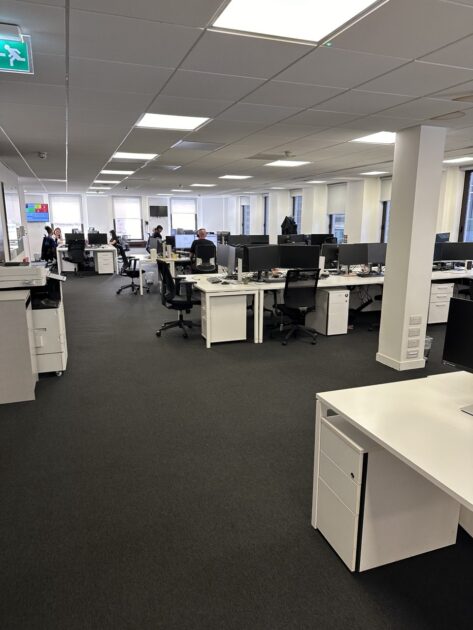
Office Furniture Disposal London: Reuse, Recycling and Clearance Options
Unwanted office furniture can become an operational problem quickly. Desks, task chairs, meeting tables, filing cabinets, storage units and reception furniture take up space, obstruct move schedules and often need to leave a building within a fixed access window.
The right route depends on the condition and quantity of the furniture, the time available, building access and whether the items are still suitable for use. Some furniture may have a realistic reuse route. Some may be recyclable depending on its materials and available facilities. Other items may require a planned commercial collection.
This guide explains the practical options for office furniture disposal in London and the information a facilities or office team should prepare before arranging a clearance.
Need a practical collection quote? Send LCWC photographs, approximate quantities, the postcode, floor and lift details, loading information and your preferred timing. LCWC can review office-furniture and wider commercial-clearance enquiries where the item type, access and schedule are suitable.
Start with an accurate office-furniture inventory
Before deciding how the furniture should leave the building, confirm what is actually there. A clear inventory helps separate usable items from damaged furniture and gives any collection provider enough information to assess labour, vehicle space and access.
Record:
- desks, workstations and bench systems;
- office chairs, meeting chairs and reception seating;
- meeting, boardroom and breakout tables;
- filing cabinets, pedestals, cupboards and shelving;
- reception desks and fitted or modular furniture;
- partitions, screens and noticeboards;
- kitchen or breakout furniture;
- furniture that needs dismantling;
- items that belong to a landlord, supplier or leasing company;
- electrical equipment or WEEE that must be handled separately.
Take wide photographs of each room and closer images of large, awkward or damaged items. Include approximate quantities rather than descriptions such as “a full office”. Mark anything that must remain so it is not confused with the clearance inventory.
Decide between reuse, resale, recycling and collection
There is no single route that suits every office. Condition, demand, time and collection capacity all matter.
Reuse within the business
Furniture in serviceable condition may be useful in another floor, branch, project space or storage area. Internal reuse can reduce unnecessary purchasing, but it still requires a realistic plan for dismantling, transport, storage and reassembly.
Before retaining furniture, confirm:
- the receiving location has agreed to take it;
- dimensions and access routes are suitable;
- the item is safe and functional;
- transport and storage are genuinely available;
- the cost and disruption are proportionate.
Do not move unwanted furniture into storage without an owner and future use. That often postpones rather than solves the clearance problem.
Resale or donation
Good-quality furniture may attract interest from used-office-furniture dealers, charities, schools, community organisations or other businesses. Acceptance is never automatic. Organisations may decline furniture because of condition, size, fire labels, style, quantity, location, access or collection timing.
If resale or donation is being considered, start early and provide honest photographs and dimensions. Confirm who will dismantle and collect the items, when collection can happen, and what will happen if only part of the furniture is accepted.
A reuse plan should include a fallback for rejected or uncollected items so the office handover is not delayed.
Material recovery or recycling
Furniture is often made from mixed materials, including wood-based boards, metals, plastics, textiles, foam, glass and fixings. Whether an item can be recycled depends on its construction, condition and the facilities available to the waste handler.
Avoid assuming that a whole desk or chair will enter one recycling stream. Some items may need dismantling or separation, and some components may not have a practical recycling route. Ask what information is required and keep claims about recycling outcomes cautious unless they are confirmed for the specific collection.
Commercial collection and clearance
A planned collection may be the practical option when:
- a large quantity must be removed together;
- furniture is damaged or unsuitable for reuse;
- the office has a fixed handover or refurbishment deadline;
- loading-bay, lift or contractor slots are restricted;
- multiple floors or rooms are involved;
- furniture is mixed with WEEE or general commercial waste;
- the team needs one coordinated clearance plan.
LCWC can review commercial office-furniture collection as a standalone enquiry or as part of a wider London office clearance. Suitability depends on the items, access and schedule, so send photographs and site details before booking.
Plan for London building access
In London offices, the furniture itself is only part of the job. Access can determine how long a collection takes and whether dismantling is needed.
Confirm:
- building postcode and collection entrance;
- floor level and lift availability;
- lift dimensions or weight restrictions where relevant;
- loading-bay booking rules and time limits;
- parking or vehicle restrictions;
- reception, security and contractor-sign-in procedures;
- restricted working hours or noise rules;
- narrow corridors, staircases or protected communal areas;
- whether furniture must be dismantled before it can leave;
- whether movers, IT teams, decorators or cleaners will be working at the same time.
Share access information before the quote is finalised. Photographs of corridors, lifts, stairs and loading areas can help identify practical constraints early.
Separate furniture from WEEE and other waste
Office clearances often include more than furniture. Monitors, printers, cables, phones and other electrical items should be identified separately rather than hidden inside cupboards or mixed with general waste.
Create clear groups for:
- reusable furniture;
- furniture for collection;
- electrical and electronic equipment;
- confidential papers or data-bearing devices;
- general commercial waste;
- liquids, paints, chemicals, batteries or specialist items that require confirmation;
- landlord-owned or retained assets.
For guidance on electrical items, use LCWC’s WEEE disposal guide for London offices. Electrical items, WEEE, data-bearing devices, heavy or awkward items, liquids, paints, chemicals, hazardous or specialist waste and unusual waste streams should be raised before booking so LCWC can confirm whether the job is suitable.
Check duty-of-care requirements
Furniture discarded by a business is commercial waste. GOV.UK advises businesses to keep waste to a minimum by taking reasonable steps to prevent, reuse, recycle or recover it in that order; to store waste safely; to use authorised waste carriers; and to complete appropriate waste-transfer documentation.
Use the official guidance rather than relying on unsupported claims:
- Dispose of business or commercial waste — GOV.UK
- Waste duty of care: code of practice — GOV.UK
- Simpler recycling: workplace recycling in England — GOV.UK
LCWC is a licensed waste carrier. Waste carrier registration: CBDU407389. If your business, landlord or managing agent needs waste-transfer notes, collection paperwork, insurance details or other records, mention this before booking so LCWC can confirm what can be provided for the job.
Build a realistic clearance sequence
A simple sequence reduces last-minute confusion:
- Confirm ownership and mark everything that must remain.
- Photograph and count the unwanted furniture.
- Identify realistic reuse, resale or donation candidates.
- Set a deadline for those routes to be confirmed.
- Prepare a collection fallback for anything not accepted.
- Separate WEEE, data-bearing devices and specialist items.
- Confirm lift, loading and contractor-access arrangements.
- Share quantities, photographs and access details for a quote.
- Confirm the agreed furniture and any exclusions before collection.
- Retain relevant paperwork and complete a final room check.
For an office move or landlord handover, LCWC’s end-of-lease office clearance checklist provides a broader planning sequence.
Common office-furniture disposal mistakes
Leaving reuse decisions too late
Donation, resale and internal transfer require time and willing recipients. Start early and set a firm decision date.
Assuming every item has resale value
Age, style, condition, volume and collection logistics affect demand. Keep a fallback route for items that are not accepted.
Ignoring dismantling and access
Large workstations may not fit through doors or lifts intact. Confirm who is responsible for dismantling and whether the work can happen during the booked access window.
Mixing furniture with electronics
WEEE and data-bearing equipment may need separate decisions. Identify them during the inventory stage.
Making unverified environmental claims
Do not promise that every item will be reused or recycled. Record confirmed outcomes only when evidence exists for the specific collection.
How LCWC can support a London office-furniture clearance
LCWC supports practical clearance and waste-collection enquiries for London offices, managed buildings and business premises, especially where access, loading, timing and building rules need to be planned in advance.
Support may include:
- office furniture collection;
- desks, chairs, tables and storage furniture;
- office-clearance planning from photographs;
- mixed furniture, WEEE and general commercial-waste enquiries;
- access planning for managed buildings;
- end-of-lease, relocation, refurbishment and downsizing clearances.
For urgent location-specific furniture removal in the City, see LCWC’s EC1–EC4 office furniture removal guide. For broader service information, visit Office Clearance London.
Request an office-furniture disposal quote
Need unwanted furniture collected from a London office, business premises or managed building? Send photographs, rough quantities, the postcode, access notes, loading details and your preferred collection time for a practical LCWC quote.
For the fastest assessment, include:
- photographs of desks, chairs, cabinets and other furniture;
- approximate quantities and condition;
- floor, lift, stair and loading information;
- items that need dismantling;
- the required clearance or handover date;
- any WEEE, IT equipment or general waste included;
- any paperwork requirements;
- items that must remain.
Contact LCWC:
- Phone: 01992 265041
- Email: info@londoncitywasteclearance.co.uk
- Request a London office-furniture clearance quote