End-of-Lease Office Clearance Checklist for London Businesses
Leaving a commercial office involves more than moving desks and returning the keys. Furniture, electrical equipment, general business waste, stored data, building access and landlord requirements all need to be considered before the handover date.
A structured end-of-lease office clearance in London can reduce last-minute disruption and help the people responsible for the move understand what needs to stay, what can be transferred, and what requires collection. This checklist is designed for office managers, facilities teams, commercial tenants, property managers, business owners and FM companies preparing to vacate London premises.
London City Waste Clearance supports practical commercial clearance enquiries across London. The details below will help you prepare the information needed for a clear assessment and quote.
Start with the lease, handover requirements and responsibilities
Before arranging collections, review the lease, licence or agreed handover schedule. Confirm what the landlord or managing agent expects the premises to look like when they are returned.
Your starting checklist should include:
the formal handover date and any earlier access deadline;
items that belong to the landlord, building owner or previous fit-out;
tenant-owned furniture, equipment and stored materials;
reinstatement or dilapidation requirements that affect what must be removed;
loading-bay rules, lift booking procedures and contractor-access requirements;
building security, reception and out-of-hours arrangements;
any restrictions on noise, parking or movement through shared areas;
who has authority to approve removal of each asset group.
Do not assume that every item in the office belongs to the outgoing tenant. Label landlord fixtures and retained equipment clearly before the clearance team arrives.
Build a room-by-room office clearance inventory
A useful office clearance checklist should be based on actual quantities rather than broad descriptions such as “a full office”. Walk through each room and record the main item types, approximate numbers and access considerations.
Photographs are particularly useful. Wide room images show volume, while closer photographs help identify unusual, bulky or electrical items. Include the postcode, floor level, lift details and collection constraints when requesting a quote.
Furniture and fittings
Record items such as:
desks, workstations and meeting tables;
task chairs, visitor chairs and reception furniture;
filing cabinets, cupboards and shelving;
pedestals, lockers and storage units;
partition furniture and freestanding screens;
kitchen or breakout-area furniture;
whiteboards, noticeboards and non-fixed accessories.
Separate loose furniture from anything fixed to the building. Dismantling requirements, large dimensions and narrow access routes can affect how an office furniture removal is planned.
Electrical equipment and WEEE
List electrical and electronic equipment separately. This can include:
monitors and desktop computers;
printers, scanners and photocopiers;
telephones, network equipment and cables;
small kitchen appliances;
servers, uninterruptible power supplies and specialist equipment;
fluorescent lamps or other electrical items requiring separate handling.
Electrical equipment may fall within waste electrical and electronic equipment requirements. Keep WEEE separate from general waste where practical and identify anything that may contain batteries or specialist components. LCWC provides information about WEEE disposal in London, but acceptance of individual items should always be confirmed before collection.
Documents, storage media and confidential material
Do not place documents, hard drives or devices containing personal or commercially sensitive information into a general clearance pile without an authorised data-handling decision.
Before collection:
identify paper records subject to retention requirements;
arrange suitable confidential-document handling where required;
back up and remove data that must be retained;
follow your organisation’s approved process for sanitising storage media;
obtain specialist data-destruction support where your policy requires certification.
The National Cyber Security Centre publishes guidance on secure sanitisation of storage media. LCWC should not be presented as providing certified data destruction unless that service and documentation have been explicitly confirmed for the job.
Decide what will be retained, reused, recycled or collected
Once the inventory is complete, divide items into clear streams:
moving to the new office;
returning to a landlord, lessor or supplier;
being retained by staff or another approved recipient;
suitable for a confirmed reuse or recycling route;
requiring commercial waste collection;
requiring specialist handling that has been arranged separately.
This decision should be made before the collection date. Unlabelled items create uncertainty and increase the risk of retained equipment being removed or clearance waste being left behind.
Reuse and recycling routes depend on condition, material, demand and the facilities available for the specific load. Avoid promising that every item will be recycled or reused. A realistic commercial office clearance plan identifies the likely waste streams and confirms what the chosen provider can accept.
Plan access for a London commercial office clearance
Access is often the most important operational part of a London office move. Central London buildings may have restricted loading times, red-route controls, underground service areas, booked goods lifts, security desks and limited contractor parking.
Confirm:
the full collection address and postcode;
floor and unit number;
passenger-lift and goods-lift availability;
loading-bay booking procedure;
maximum vehicle size or height restrictions;
stairs, narrow corridors or protected communal areas;
reception, security and contractor sign-in requirements;
permitted working hours;
whether a building manager or tenant representative must remain on site;
any permits or parking arrangements controlled by the client or building.
Where possible, provide access photographs with the inventory. For managed premises, the practical planning points in LCWC’s guide to commercial waste collection in Central London may also help.
Do not book a clearance solely around the lease expiry time. Allow a practical margin for a final walk-through, cleaning and any issues identified by the landlord or managing agent.
Before appointing a clearance or waste contractor:
check that the provider is appropriately registered for the activity;
confirm which waste types it can accept;
describe the load accurately;
retain the relevant waste-transfer or collection paperwork;
keep specialist or hazardous items separate unless acceptance is confirmed.
The official Environment Agency Waste Carriers, Brokers and Dealers register can be used to check registrations. The endpoint was temporarily unavailable during this package’s local validation, but it remains the accepted authoritative reference.
London City Waste Clearance’s approved waste-carrier registration is CBDU407389. Job-specific paperwork and accepted waste types should still be confirmed during quotation and booking.
Use this final-week checklist before the handover:
confirm the final inventory and photographs;
mark all items that must remain;
separate WEEE, general waste and specialist items;
remove personal belongings and active business records;
confirm data-handling decisions for devices and storage media;
check the collection date, arrival window and on-site contact;
reconfirm loading-bay and lift bookings;
notify reception, security and the managing agent where required;
protect retained floors, walls and communal routes as agreed;
keep access cards, keys and building contacts available;
retain collection and waste-transfer paperwork;
schedule a final inspection before returning the premises.
A phased clearance may be more suitable where staff remain in occupation or the new office is not ready. This should be discussed during planning rather than assumed to be available at short notice.
Common end-of-lease clearance mistakes
Leaving the inventory until the final days
Without photographs and approximate quantities, it is harder to assess vehicles, labour, timing and accepted waste streams.
Treating all electrical items as general waste
WEEE and battery-containing equipment may need separate handling. Identify it early and confirm acceptance.
Forgetting building-management requirements
A collection can be delayed if the loading bay, goods lift or contractor access has not been booked.
Mixing retained assets with clearance items
Use labels, room plans or separate areas so the clearance scope is unambiguous.
Assuming every item can be taken
Hazardous, specialist, liquid, pressurised or unknown materials may require a different provider or prior confirmation. Do not conceal or misdescribe the load.
Booking the clearance at the handover deadline
Allow time for a final inspection, cleaning and any items that require a separate route.
How LCWC can support an office handover
London City Waste Clearance handles practical office-clearance and business-waste enquiries across London. Depending on the confirmed scope, the team can assess office furniture, general commercial waste and suitable electrical items while planning around access, floor level, loading arrangements and timing restrictions.
A quote depends on the waste type, quantity, location, access and proposed timing. Photos and accurate access notes help the team assess whether the enquiry is suitable and what further information is required.
Frequently asked questions
How far in advance should an end-of-lease office clearance be arranged?
Start planning as soon as the handover date and removal responsibilities are known. The appropriate lead time depends on the office size, inventory, access rules, waste types and whether the clearance must happen in phases. Availability should be confirmed rather than assumed.
What information is needed for an office-clearance quote?
Provide the postcode, floor level, lift and loading details, photographs, approximate quantities, item types, proposed dates and any building-management restrictions. Identify WEEE, bulky items and anything that may require specialist handling.
Can office furniture be recycled or reused?
Some items may be suitable for reuse or recycling depending on their condition, materials, demand and available facilities. Do not assume that every item will be accepted for reuse or that a fixed recycling outcome can be guaranteed.
How should computers and hard drives be handled?
Follow your organisation’s approved data-retention and media-sanitisation procedure before equipment leaves your control. Arrange specialist certified destruction where your policy requires it. Confirm separately whether the clearance provider can accept the physical equipment as WEEE.
Will paperwork be provided for the collection?
Confirm the required waste-transfer or collection paperwork when arranging the job. Retain the documentation with the business’s waste records in line with applicable requirements and internal policies.
Can the clearance happen outside normal office hours?
Out-of-hours work may be possible for some enquiries, but it depends on availability, building rules, access and the agreed scope. It is not guaranteed and must be confirmed before booking.
Request an end-of-lease office clearance quote
Preparing to leave a London office? Send LCWC photographs, approximate quantities, the collection postcode, floor and lift information, loading details and the proposed timing.
EC2 Office Clearance and Same-Day Waste Collection Guide
Need office clearance in EC2 or commercial waste collected from an EC2 office, managed building or business premises? LCWC can review one-off, urgent or repeat waste collection enquiries where the waste type, access and schedule are suitable.
For a practical quote, send photos of the items, rough quantities, the building postcode, floor level, lift or loading bay details, access restrictions and your preferred collection date or time.
EC2 covers some of London’s busiest commercial streets and office buildings, including areas around Moorgate, Liverpool Street, Broadgate, Bishopsgate, Finsbury Circus and the wider City of London. In these locations, office clearance is rarely just about removing items. It often depends on building rules, loading windows, lift access, security sign-in, parking restrictions and the need to minimise disruption for tenants and office users.
When EC2 Office Clearance Is Usually Needed
Office clearance in EC2 is often needed when:
a tenant is moving out
an office is being refitted or reconfigured
furniture, chairs, desks or storage units need removing
old monitors, printers, cables or office electronics need clearing
a back office, storage room or comms area has built up unwanted items
a landlord or managing agent needs space cleared before handover
a business needs a fast quote for an urgent clearance window
Same-day or urgent collection may be possible depending on location, access, waste type and schedule. It should not be assumed until LCWC has reviewed the photos, quantities and building access details.
Usually Suitable for Enquiry
These items are usually suitable for an initial EC2 office clearance or waste collection enquiry, subject to access, volume, item condition and final confirmation before booking:
office furniture such as desks, chairs, filing cabinets and cupboards
bagged office waste
packaging and cardboard from business premises
office equipment
bulky office items
storage-room waste
waste from office moves, refits and tenant changes
separated WEEE where confirmed, such as monitors, printers, cables and small office electronics
If the job involves mixed items, send clear photos or a short video so LCWC can understand the amount of labour, loading, vehicle space and any separate handling requirements.
Confirm Before Booking
Some items need to be raised before booking so LCWC can confirm whether the job is suitable. Mention any of the following in the quote request:
electrical items or WEEE
data-bearing devices
heavy or awkward items
liquids
paints
chemicals
hazardous or specialist waste
unusual commercial waste streams
LCWC can review WEEE and office electronics enquiries, including monitors, printers, cables, small IT equipment and electrical items, where the waste type, access and collection requirements are suitable. Do not assume secure data destruction, specialist hazardous waste handling or guaranteed paperwork unless this has been confirmed for the job.
Why EC2 Office Clearances Need Access Planning
EC2 offices often sit inside managed buildings with strict access procedures. A quote is easier to prepare when the building details are clear from the start.
Useful details include:
building postcode and exact collection point
floor level
lift or goods lift availability
loading bay rules
red route or parking restrictions
reception or security sign-in requirements
collection window or building management restrictions
whether the job must happen before, during or after office hours
whether tenants or staff will be present during the work
This is especially relevant for City of London and EC postcode offices, where loading bays, red routes, security desks, goods lifts and short collection windows often affect how a job must be planned.
What to Send for a Faster Quote
For the fastest response, include:
photos of the waste
rough quantities
building postcode
floor level
lift or loading bay details
access restrictions
preferred collection date or time
whether WEEE, furniture or bulky items are included
This helps LCWC estimate the likely labour, vehicle space, access requirements and timing constraints before confirming whether the job is suitable.
Support for Facilities Managers and Managing Agents
Facilities managers, managing agents and office managers often need clearance work to fit around building rules rather than simply around the customer’s preferred time.
Sending access details early helps:
avoid delays
quote accurately
plan labour and vehicle requirements
coordinate with security or building management
reduce disruption for tenants and office users
For EC2 offices, this is especially useful when the collection involves loading bays, goods lifts, shared reception areas or short handover deadlines.
Waste Carrier and Paperwork
LCWC is a licensed waste carrier. If your business, landlord or managing agent needs waste transfer notes, collection paperwork, insurance details or other records, mention this before booking so LCWC can confirm what can be provided for the job.
Waste carrier registration: CBDU407389
Related LCWC Services
If your EC2 clearance includes a wider office move, larger furniture clearance or end-of-lease handover, LCWC’s office clearance service may be relevant. If the job includes monitors, printers, cables or office electronics, the WEEE disposal guide explains how to raise electrical items before booking.
Request an EC2 Office Clearance Quote
Need waste collected from a London office, business premises or managed building? Send photos, rough quantities, postcode, access notes, loading details and your preferred collection time for a practical LCWC quote.
WEEE Disposal London for Offices and Commercial Properties
Need old office electronics cleared from a London workplace? LCWC helps businesses, facilities managers, office managers, landlords and commercial property teams arrange practical WEEE disposal for unwanted monitors, printers, cables, small office electronics and IT equipment.
Whether you are moving office, clearing a storeroom, preparing for landlord handover, refurbishing a floor, managing a multi-floor clearance or removing redundant equipment from a managed building, the aim is simple: identify the items, agree the access, book the collection and clear the space safely.
Send photos for a fast WEEE disposal quote. LCWC can review office electronics from photos and help plan a practical London collection around access, deadlines and building requirements.
Book a London office electronics collection. Need monitors, printers or IT equipment removed? Contact LCWC today.
For a faster quote, send:
photos or a short video of the electronics
approximate quantities, such as number of monitors, printers or boxes of cables
office address or postcode
floor level, lift access and loading bay details
preferred collection date or deadline
whether the WEEE is part of a wider office clearance
any building management, landlord or paperwork requirements
LCWC can quote from photos and arrange practical collection slots where available. This is useful for London offices where access, lift bookings, loading bays, managed-building rules and collection windows need planning in advance.
Where applicable, LCWC can also discuss collection paperwork, building access requirements and commercial waste handling expectations before the job is booked. Confirm any specific documentation requirements in advance so the collection can be planned correctly.
What Is WEEE?
WEEE stands for Waste Electrical and Electronic Equipment. In an office setting, this usually means unwanted equipment that uses electricity, batteries, plugs, chargers or cables.
For businesses, WEEE is not just ordinary rubbish. Electrical and electronic items often need to be separated from general waste and handled through an appropriate disposal or recycling route.
Common office WEEE can include:
computer monitors and screens
printers and scanners
keyboards, mice and desktop accessories
phones, headsets and chargers
routers, docking stations and small IT equipment
cables, extension leads and power supplies
small kitchen or office electrical items
mixed electronics from storerooms, cupboards or comms rooms
If you are unsure whether an item counts as WEEE, send photos when requesting a quote. LCWC can help identify what needs separating before collection.
Common Office Electronics We Collect
Office electronics often build up slowly: old monitors under desks, printers left after a contract change, cables in cupboards, redundant phones, broken peripherals and unused IT equipment after a relocation.
LCWC can help with office electronics disposal in London for items such as:
monitors and display screens
printers, scanners and photocopier-related peripherals
desktop computers and towers where suitable for collection
keyboards, mice and docking stations
cables, chargers and power packs
phones, handsets and headsets
routers, switches and small network equipment
boxed electrical equipment from storage areas
small electrical appliances from offices, kitchens and breakout areas
WEEE can be collected as a standalone job or as part of a wider office clearance involving furniture, general commercial waste and end-of-lease items.
For larger or unusual items, send photos first so the collection can be planned properly.
Send photos for a fast WEEE disposal quote. If you have monitors, printers, cables, boxed electronics or mixed IT equipment to remove, LCWC can review the items, access and deadline before confirming the next step.
WEEE Disposal Process
A clear WEEE disposal process helps avoid delays, missed items and access problems on the day.
1. Send photos and item details
Start with photos of the electronics and a rough item list. Include wide photos of the room or storage area and close-ups of the main equipment.
Helpful details include:
number of monitors or screens
number and size of printers
whether items are loose, boxed, stacked or still installed
whether equipment is upstairs, in a basement, in a comms room or spread across floors
whether anything needs disconnecting or separating before collection
2. Confirm whether this is WEEE-only or part of a wider clearance
Some jobs are simple WEEE collections. Others are mixed office clearances with desks, chairs, cupboards, filing cabinets, packaging, office furniture and general commercial waste. For commercial sites, it is useful to confirm whether LCWC is quoting a WEEE-only collection or a wider office clearance package.
Tell LCWC whether the job includes:
office furniture
general waste
confidential or sensitive items
IT equipment
end-of-lease clearance
landlord handover requirements
office move or refurbishment deadlines
This helps plan labour, vehicle space and timing.
3. Separate WEEE where possible
Where practical, separate electronics from furniture and general waste before collection. This keeps the job organised and supports a cleaner recycling-focused workflow.
Group items by type if possible:
monitors and screens
printers and scanners
cables and chargers
phones and headsets
small electrical items
mixed IT accessories
If you cannot separate everything, send photos and explain the situation when requesting a quote.
4. Agree access and collection timing
London offices often have access rules that affect the job. Before booking, confirm:
loading bay availability
goods lift rules
security sign-in requirements
building management restrictions
parking or loading limitations
floor level and carrying distance
whether out-of-hours access is needed
whether the collection must happen before a move, refit or handover deadline
5. Clear the items and leave the area usable
The goal is to remove the agreed WEEE and leave the area clear, tidy and ready for the next step, whether that is cleaning, relocation, office fit-out, landlord inspection or continued business use.
Where the collection involves a managed building, multi-floor office, landlord handover or mixed WEEE/furniture/commercial waste clearance, confirm access rules and paperwork expectations before booking so the job can be planned properly.
Office Moves and Clearances
WEEE disposal is often part of a wider office move or clearance.
During relocations, refurbishments and end-of-lease projects, businesses often discover unwanted electronics that have been ignored for years. These can slow down handover, take up vehicle space, block storage rooms or create confusion about what should stay and what should go.
Typical office-move WEEE includes:
old monitors from desk moves
printers no longer under contract
redundant cables and chargers
phones and headsets from previous systems
small electronics from cupboards and store rooms
IT accessories left after staff moves
mixed electronic waste from comms rooms or back-office areas
LCWC can support WEEE disposal alongside office furniture disposal and commercial waste clearance. This is useful when one team needs to clear multiple item types in one planned job, especially during office moves, end-of-lease clearances, landlord handovers, refurbishment clearances and managed-building projects.
Mixed collections may include monitors, printers and cables alongside desks, chairs, cupboards, filing cabinets, packaging and general commercial waste. For multi-floor clearances, confirm lift access, floor levels, loading arrangements and any building management requirements before booking.
Before a move or handover, walk the site and mark:
items to remove
items to keep
leased or supplier-owned equipment
IT assets awaiting separate handling
electronics that may contain data
items needing landlord or building approval before removal
Book a London office electronics collection. If your WEEE disposal is part of an office move, end-of-lease office clearance, furniture disposal or wider commercial waste collection, send photos and access details so LCWC can plan the job around the handover deadline.
Data-Bearing Devices and Considerations
Some office electronics may contain data or sensitive business information. This can include computers, laptops, servers, storage devices, phones, drives, tablets and some specialist equipment.
Before booking a WEEE collection, businesses should identify any data-bearing devices and decide how they need to be handled internally.
Important considerations:
remove or secure sensitive business data before disposal
separate laptops, desktops, servers, drives and storage media from general WEEE
check whether devices are company-owned, leased, supplier-owned or under an IT contract
confirm whether your IT team, data-security provider or asset-disposal partner needs to handle specific items first
do not mix confidential data-bearing equipment into general office waste without review
LCWC can help clear agreed items, but the business should confirm its own data handling requirements before collection. If data-bearing devices are included, raise this when requesting a quote so expectations are clear.
Compliance and Documentation
Business WEEE disposal should be treated with more care than everyday office rubbish. Facilities managers and office managers may need reassurance that electronics are being separated properly and that collection requirements are understood before the job starts.
LCWC can support practical commercial collections for London office environments, managed buildings and business premises. Before booking, confirm any paperwork, building access or documentation requirements so the collection can be planned around your internal process.
Before booking, confirm whether your business needs:
waste transfer notes or collection paperwork
WEEE-specific documentation
records for landlord, managing agent or internal compliance
separation of WEEE from general commercial waste
photos or confirmation after collection
recycling-focused handling where suitable
If paperwork is required, mention it before the collection is booked. That allows the job to be planned around your documentation expectations rather than discovered afterwards. Where applicable, LCWC can discuss waste transfer notes, collection paperwork or other records required by the business, landlord, managing agent or internal compliance team.
For managed buildings, landlord-controlled offices and commercial property teams, it is also worth checking whether the building needs insurance details, RAMS, method statements, contractor sign-in details or collection time approval. These details are especially important for commercial collections in office environments where facilities teams, security desks, loading bays and other contractors may all be involved.
London Access and Logistics Considerations
WEEE disposal in London is often less about the electronics themselves and more about access.
A few boxes of cables can be simple. A floor of monitors, printers and redundant office electronics in a managed building can require lift bookings, loading bay timing, security access and careful coordination with other contractors.
Before collection, check:
Is there a loading bay?
Does it need to be booked?
Are there goods lift rules or lift protection requirements?
Is the collection on an upper floor or basement?
Are there red routes, parking controls or short loading windows?
Does security need contractor names or vehicle details?
Are there restricted working hours?
Is the clearance linked to a move, refit or handover deadline?
Are items in one place or spread across multiple floors?
This is especially important for Central London and City offices where collection windows can be tight. Clear access information helps LCWC plan the job, quote more accurately and avoid delays on the day.
Why Businesses Use LCWC for WEEE Disposal
Businesses use LCWC when they need practical clearance support, not a complicated process. LCWC can help London offices arrange electronics removal without disrupting staff, building management or handover deadlines.
LCWC is useful for:
facilities managers who need electronics cleared before a deadline
office managers who want old monitors, printers and cables gone quickly
landlords preparing commercial spaces for inspection or handover
commercial property teams coordinating multi-tenant or managed-building clearances
businesses relocating offices and separating WEEE from furniture and general waste
teams managing multi-floor clearances, office moves, refurbishments or end-of-lease handovers
teams that need a quote from photos rather than a slow site-visit process
LCWC can help with:
WEEE disposal London enquiries
office electronics disposal London jobs
IT equipment disposal London support
office monitor disposal
printer disposal London
business WEEE disposal
office recycling London as part of wider commercial clearance work
The strongest jobs usually start with clear information: photos, quantities, access details, deadline and whether the electronics are part of a wider office clearance.
Request a WEEE Disposal Quote
Need WEEE disposal for a London office, managed building or commercial property?
Need monitors, printers or IT equipment removed? Contact LCWC today. Send photos for a fast WEEE disposal quote and include item quantities, access notes and your preferred collection date.
For the fastest response, send:
photos of monitors, printers, cables and electronics
rough quantities
postcode or site location
floor level and lift/loading details
whether data-bearing devices are included
whether paperwork is required
whether the job is part of an office move, clearance or landlord handover
LCWC can then help plan a practical collection and clear the agreed WEEE from your office or commercial site.
Book a London office electronics collection. If the WEEE is part of a wider office clearance, furniture disposal, commercial waste collection or end-of-lease handover, mention this in the enquiry so the full job can be planned together.
Send LCWC photos of the items, the office postcode, floor level, lift/loading details and your preferred time window. We can use those details to provide a fast commercial clearance quote and plan the collection properly.
CTA button text: Send Photos for a Fast Quote
Need an office cleared without disrupting the building? LCWC helps facilities managers, office managers, landlords and commercial property teams arrange practical commercial clearances across London.
We clear office furniture, WEEE, IT equipment and general commercial waste for moves, refurbishments, downsizing projects and end-of-lease handovers. The focus is straightforward: agree the access, arrive for the scheduled slot, remove the right items and leave the space tidy for the next step.
Request a commercial office clearance quote from LCWC
For a faster quote, send:
photos or a short video of the items
office address or postcode
floor level, lift access and loading bay details
preferred collection date and time window
whether the job includes WEEE, IT equipment, furniture or general commercial waste
any landlord, building management or handover requirements
LCWC can quote from uploaded photos and arrange scheduled collection slots where available. This is useful for managed offices, shared buildings and City of London sites where access windows can be tight.
Facilities Manager Checklist
A commercial office clearance can include desks, chairs, monitors, files, cables and general workplace contents that need sorting before removal.
Use this checklist before booking a clearance. It helps avoid delays, unclear pricing and access problems on the day.
1. Confirm what needs to be cleared
Walk the space and list the main item types:
desks, workstations and office chairs
filing cabinets, pedestals and storage units
meeting room, reception and breakout furniture
monitors, printers, cables, phones and small office electronics
packaging, old stationery and non-hazardous office waste
loose items from kitchens, store rooms, comms rooms and cupboards
Also mark anything that should not be removed. For end-of-lease jobs, this may include landlord fixtures, leased equipment, IT assets awaiting collection or items required by another contractor.
2. Take clear photos before requesting a quote
Photos are often the quickest way to get a realistic price and collection plan. Include:
wide shots of each room or area
close-ups of bulky or awkward items
photos of WEEE or IT equipment
access route photos if stairs, narrow corridors or tight lifts are involved
loading bay or entrance photos where useful
A good photo set helps estimate labour, vehicle space, dismantling time and access time before anyone arrives on site.
3. Separate furniture, WEEE and general waste
Group items before collection where possible:
reusable or recyclable furniture
electrical items and WEEE
general commercial waste
confidential or sensitive items needing separate handling
items that require dismantling
items that must stay in place
This keeps the job organised and supports a recycling-focused approach where suitable.
4. Check loading bay, lift and access rules
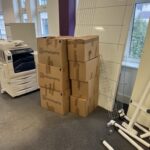
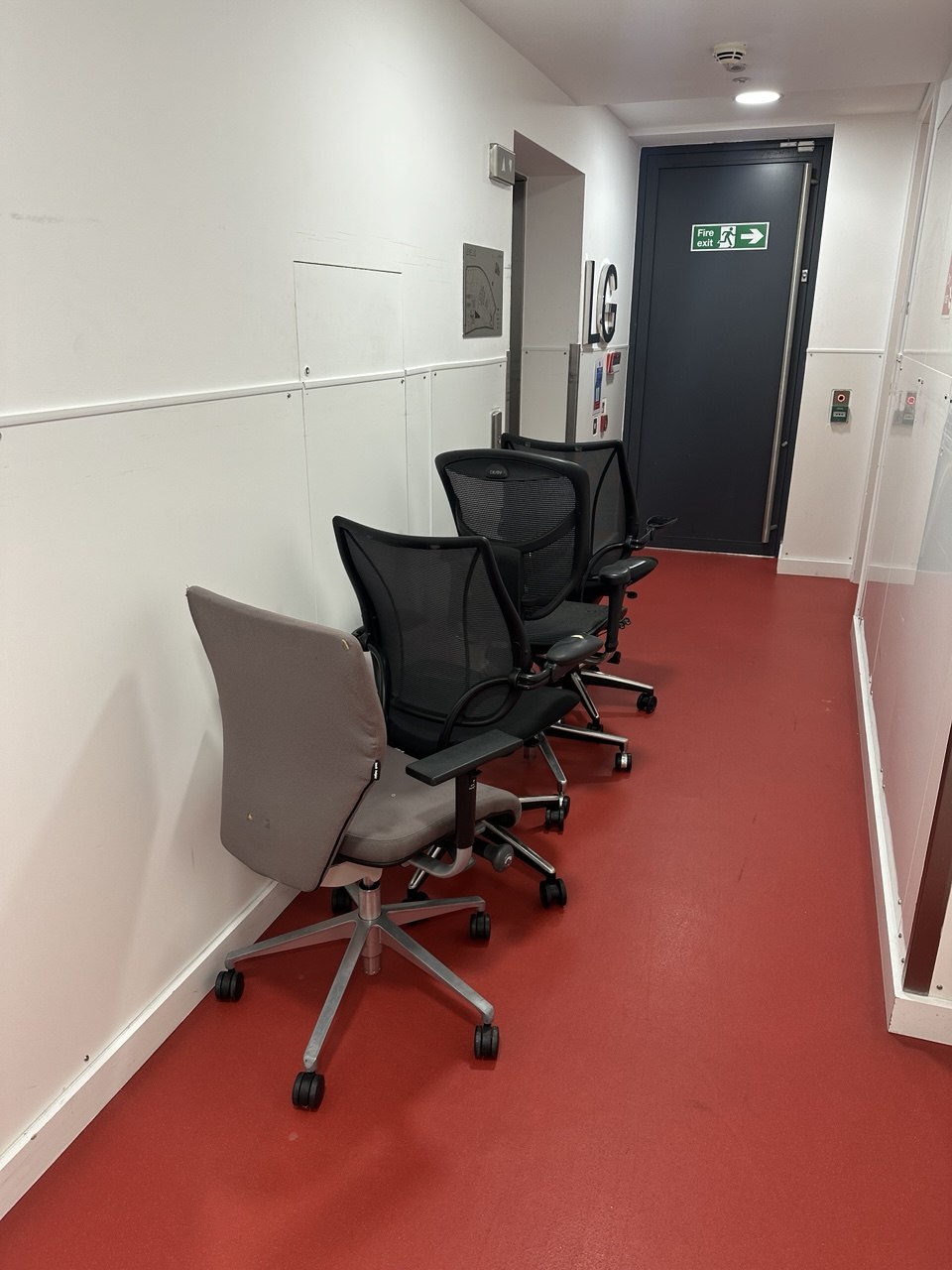
Office furniture should be staged safely without blocking access routes, fire exits or managed-building corridors before clearance.
Access can decide whether the clearance runs smoothly. Confirm:
whether there is a loading bay and if it needs booking
goods lift availability and lift protection rules
stair carries or long walking distances
parking controls, red routes or controlled loading times
building sign-in procedures
whether security needs contractor details in advance
whether RAMS, insurance details or method statements are required
whether work must be completed inside a fixed time window
This is especially important for EC1, EC2, EC3 and EC4 offices, where managed buildings and short City loading windows are common.
5. Agree timing with building management
For managed offices and commercial buildings, check whether clearance work can happen:
during office hours
early morning or evening
at weekends
between staff move-out and cleaning
before a landlord inspection
alongside movers, IT teams, decorators or cleaners
LCWC can work with scheduled collection slots and flexible hours where available. If your building has strict access rules, share them before the job is booked.
6. Prepare for paperwork and handover
For commercial waste clearance, paperwork may matter to your business, landlord or managing agent. Check whether you need:
waste transfer notes
disposal documentation
WEEE separation notes
confirmation that the work is handled by an insured/licensed operator
photos of the cleared space for internal records or landlord handover
If paperwork is required, raise it before collection so expectations are clear.
7. Leave the office landlord-ready
A landlord-ready office is not simply empty. It should be clear, safe to access and ready for inspection, cleaning or the next contractor.
Before handover, check:
meeting rooms, cupboards and storage rooms are clear
kitchen, breakout and back-office areas are checked
comms rooms and IT areas are reviewed
walkways and exits are unobstructed
items to remain are clearly marked
waste paperwork is stored or shared where needed
For end-of-lease office clearance, this final check can help avoid last-minute issues before inspection.
Common Office Clearance Problems in London
Restricted loading and parking
London commercial clearances often involve short loading windows, controlled parking, red routes, one-way systems and building access rules. A job that looks simple from the item list can become difficult if the vehicle cannot stop close to the building.
Before booking, confirm where loading can happen and how long the vehicle is allowed to stay.
Lift booking issues
Many managed buildings require goods lifts to be booked in advance. Some restrict furniture movement during busy hours or require lift protection. If the lift is not available when the team arrives, the job may take longer or need to be rearranged.
Mixed office waste
Office moves and refurbishments often create a mix of furniture, electrical equipment, packaging, broken chairs, old files, stationery and loose commercial waste. Separating WEEE, furniture and general waste before collection makes the job faster and clearer.
End-of-lease pressure
End-of-lease clearances are often time-sensitive. Facilities teams may be working around dilapidations, cleaners, IT decommissioning, removals and landlord inspections.
The common mistake is leaving the clearance too late or underestimating access and loading time. If there is a fixed handover date, include it when requesting the quote.
Unclear responsibility for items
In commercial properties, responsibility can sit with the tenant, landlord, managing agent, IT supplier or another contractor. Before clearance starts, confirm who controls:
furniture
IT equipment
leased printers or machines
server or comms room items
fixtures and fittings
stored items left by previous occupiers
This helps avoid removing the wrong items.
What LCWC Handles
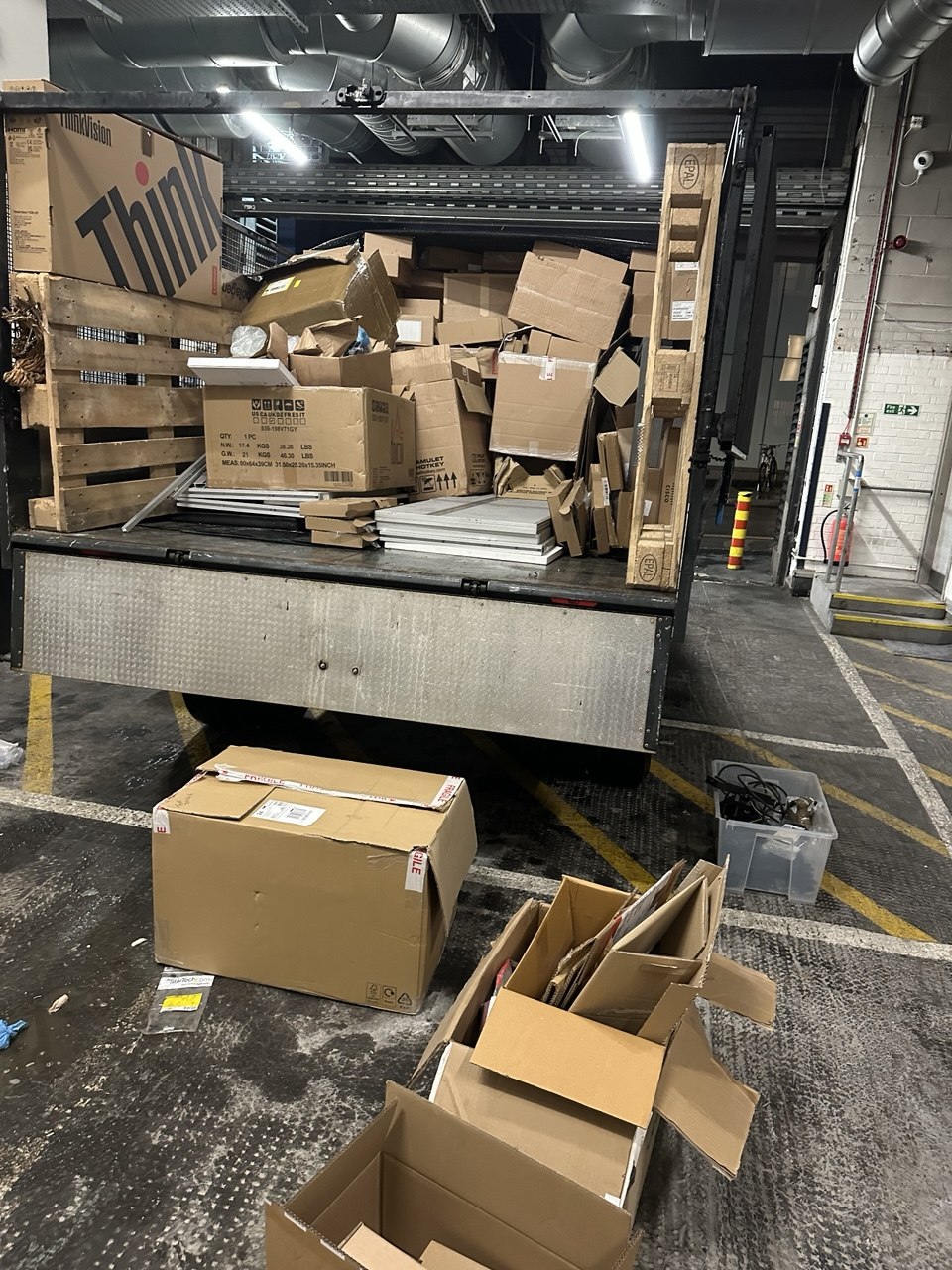
Office clearances often involve desks, chairs, monitors, drawer units, printers and other workplace contents that need planning before removal.
LCWC supports commercial office clearance and commercial waste clearance across London. Typical work includes office furniture removal, WEEE separation, general waste clearance and end-of-lease clearances.
Office furniture disposal London
LCWC can help clear unwanted office furniture such as:
desks and bench systems
office chairs
meeting tables
filing cabinets and pedestals
reception furniture
shelving, cupboards and storage units
breakout area furniture
Where suitable, items are handled with a recycling focus rather than treated as general waste by default.
Commercial waste clearance London
Office clear-outs can include general business waste from moves, refits, downsizing or storage areas, including:
packaging and cardboard
old stationery and office supplies
non-hazardous loose waste
broken furniture parts
kitchen and staff room clear-out waste
store room and cupboard contents
If there are unusual, hazardous or specialist items, flag them before booking so the job can be assessed properly.
Planned and urgent office clearances
Some jobs are planned weeks ahead. Others need to happen quickly because a move date changes, a landlord deadline moves forward or another contractor needs the space cleared.
LCWC can help with planned collections and urgent commercial clearance enquiries where availability allows.
WEEE and IT Disposal
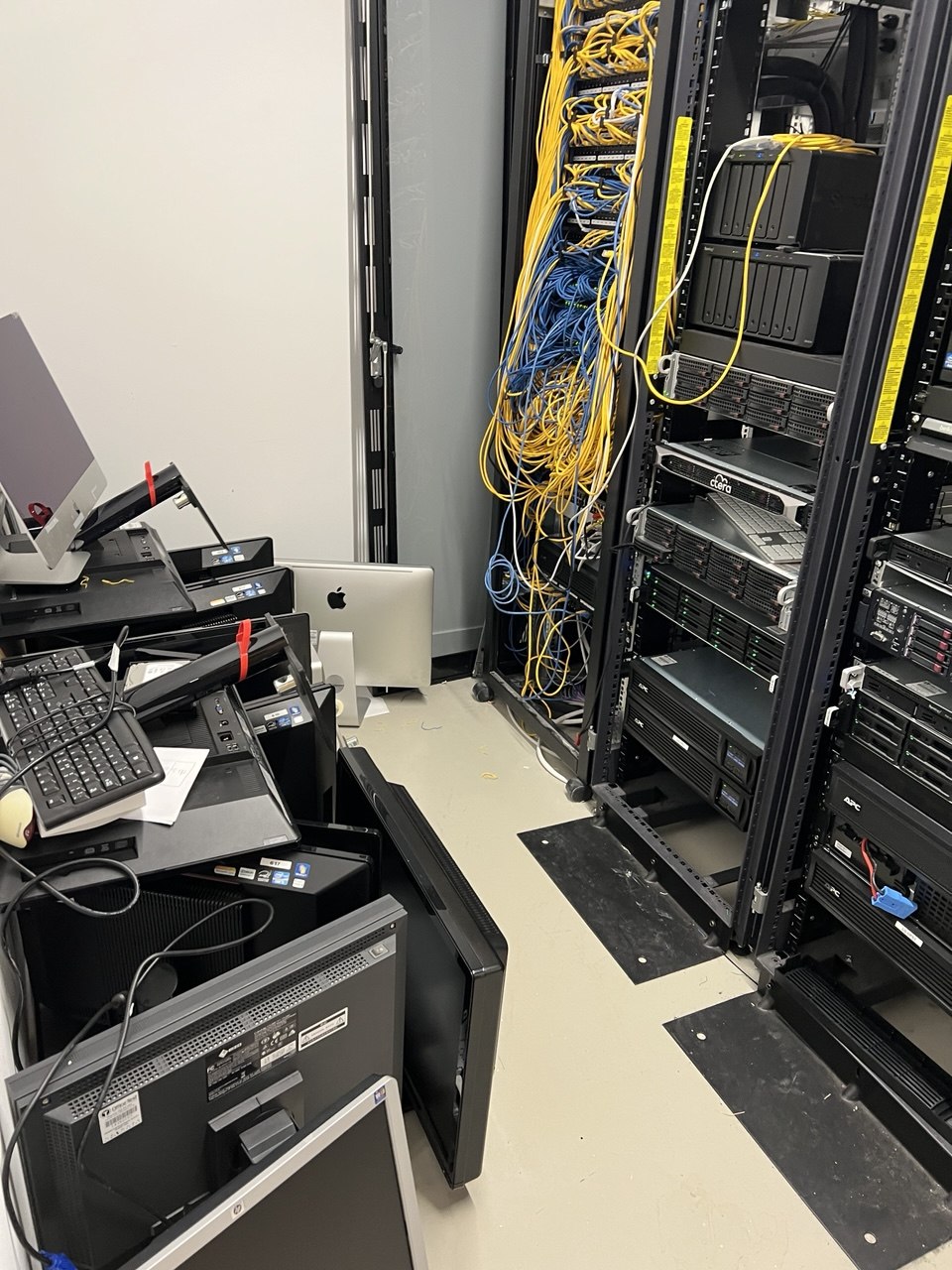
Office clearances can include monitors, computers, cables and server-room equipment that need separating and handling through the right WEEE disposal route.
Office clearances often include electrical items that should be separated from general waste. WEEE office disposal can include:
monitors and screens
printers and scanners
keyboards and mice
cables, chargers and power supplies
phones and small office electronics
small kitchen appliances
other waste electrical and electronic equipment
If the clearance includes computers, servers, hard drives, network equipment or data-bearing devices, mention this before booking. LCWC can help remove WEEE and office electronics, but specialist data destruction, asset tracking, serial-number reporting or chain-of-custody requirements should be agreed separately before the job starts.
Do not mix WEEE into general waste piles if it can be avoided. Separating electrical items before collection supports responsible handling and makes the clearance easier for facilities teams to manage.
Access and Loading Bay Considerations
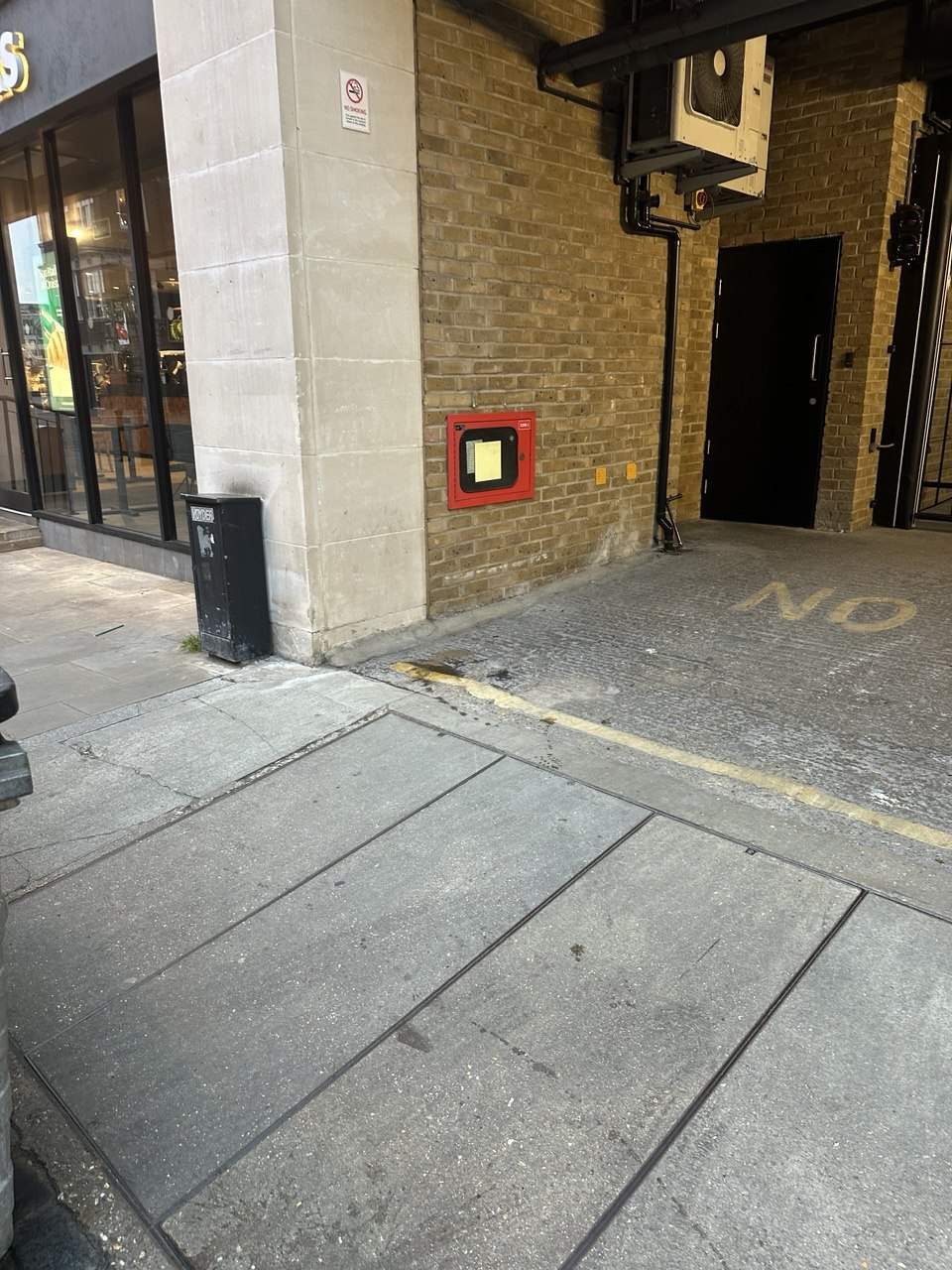
Commercial clearances often depend on loading bay access, vehicle positioning and keeping packaging or office contents organised for removal.London office clearances often depend on loading bay access, service entrances, parking restrictions and timed collection slots.
For London office clearances, access planning is often as important as the items being removed.
Loading bay
Check:
Is there a loading bay?
Does it need to be booked?
What size vehicles can use it?
Are there time limits or height restrictions?
Is there a service entrance separate from reception?
Building access
Confirm:
which entrance the team should use
whether security needs company details in advance
whether access fobs or escorts are required
whether contractor documents are required
whether furniture can be moved through reception or shared areas
Lifts and stairs
Check:
whether there is a goods lift
whether lift protection is needed
whether passenger lifts are restricted
whether stair carries are required
whether corridors are narrow or shared with tenants
Timing
Confirm:
whether work can happen during office hours
whether early morning, evening or weekend slots are needed
whether the job is tied to a move-out, refurbishment, cleaning or inspection deadline
These details help LCWC plan labour, timing and vehicle access correctly.
Access details make the quote more accurate.
If your London office has loading bay rules, lift bookings, parking restrictions or a fixed handover deadline, include those details with your photos. LCWC can then plan the right team, timing and collection slot.
CTA button text: Send Photos + Access Details
Landlord and End-of-Lease Handover
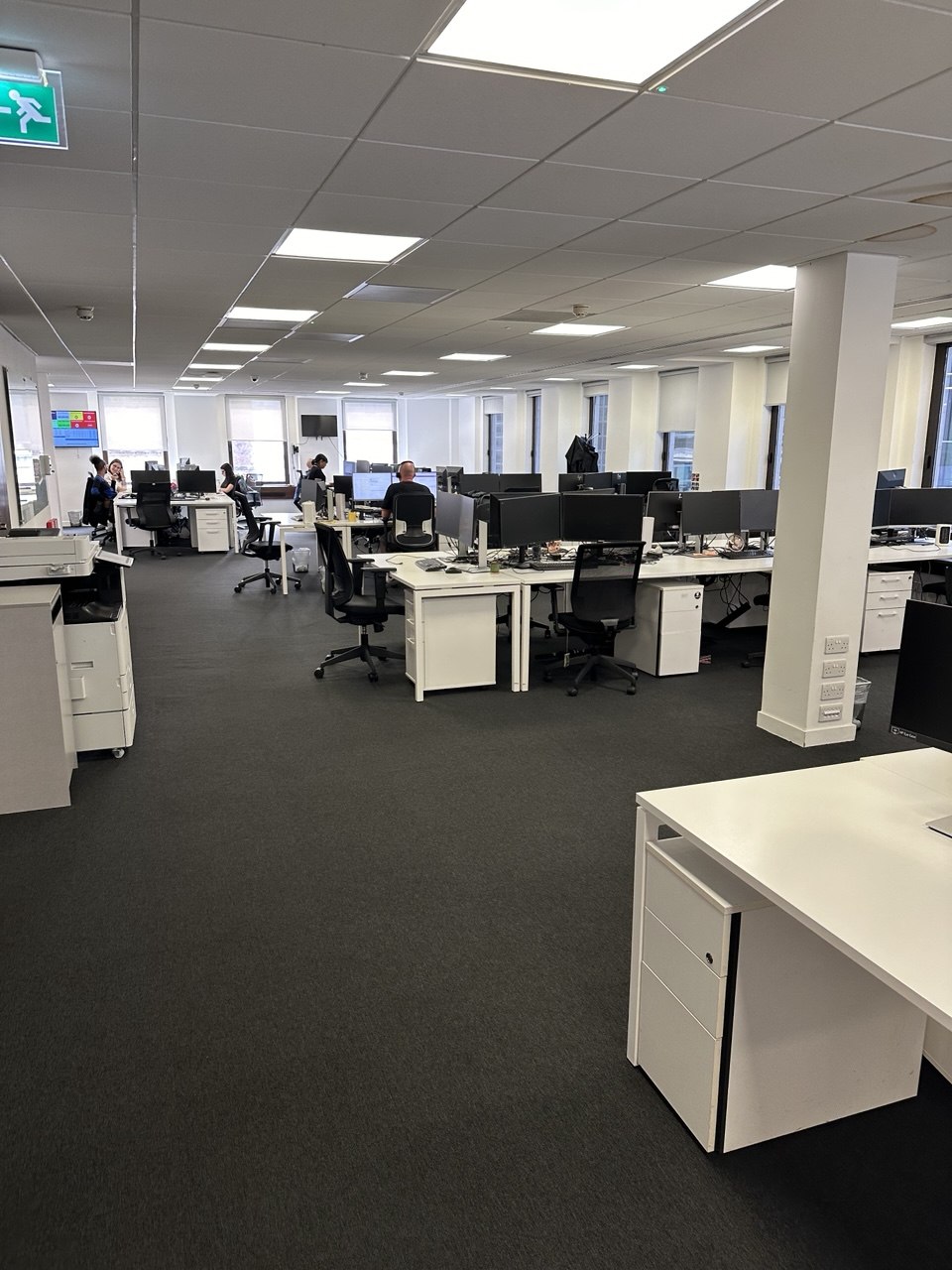
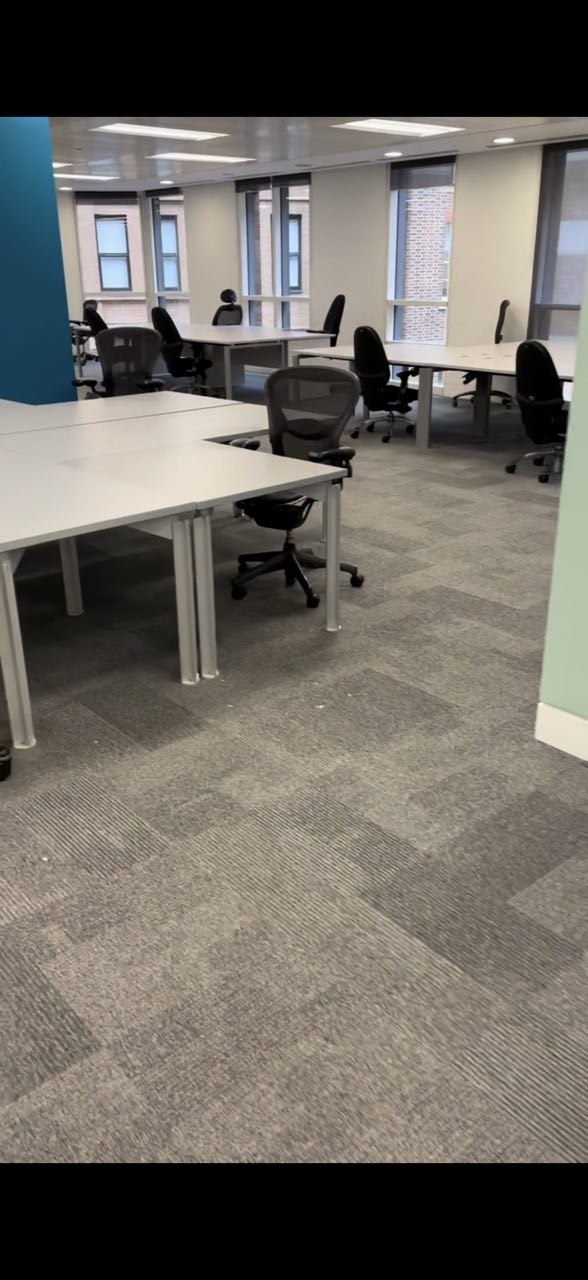
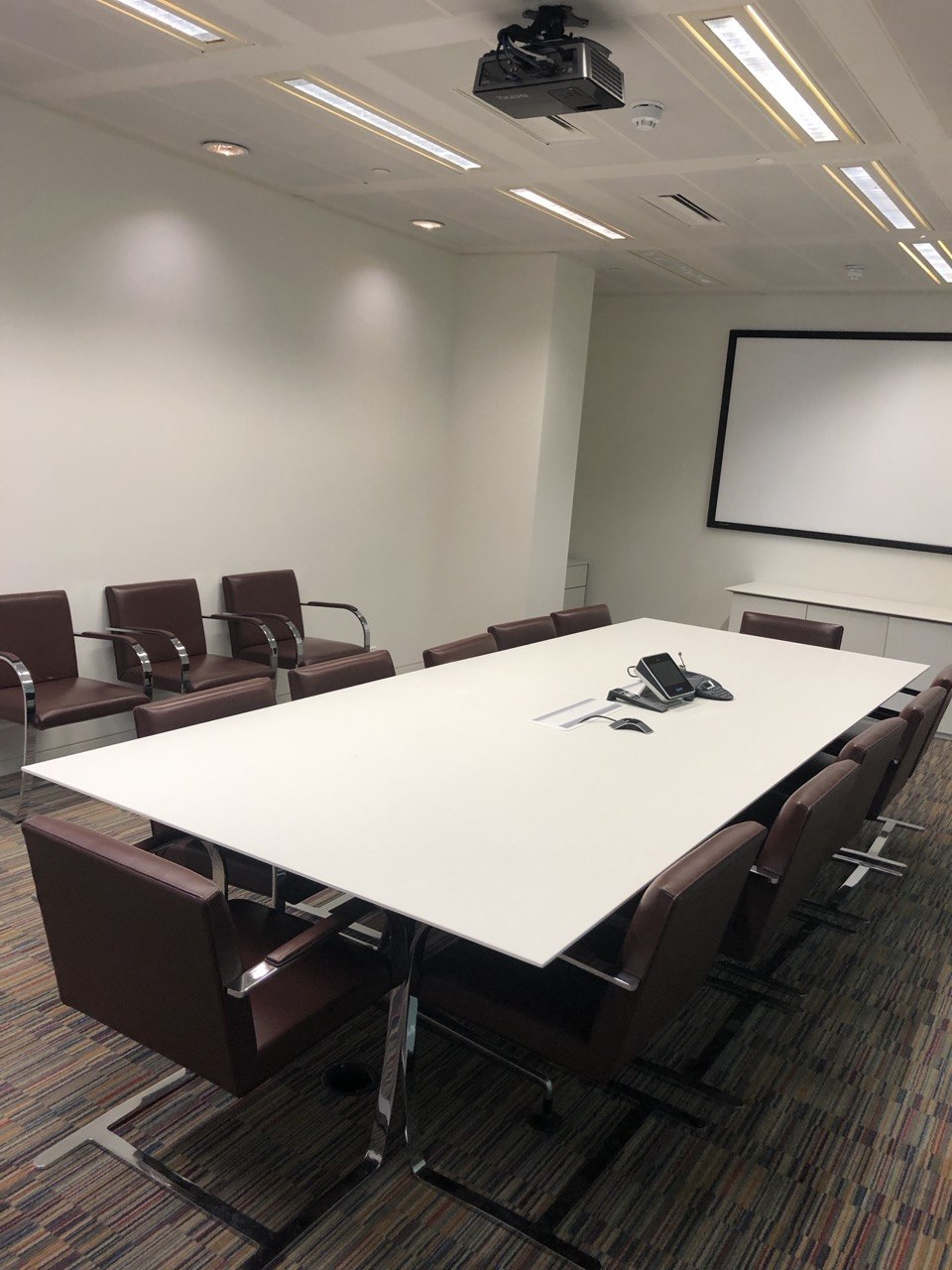
A tidy office before final furniture removal helps facilities managers check what remains, plan access and prepare the space for handover.Meeting rooms, furniture and AV equipment should be reviewed before end-of-lease office clearance so the space can be prepared properly for handover.
End-of-lease office clearance usually has a practical outcome: the space needs to be ready for landlord inspection, dilapidations review, cleaning, repairs or handover to the next occupier.
LCWC can help clear:
unwanted office furniture
WEEE and small office electronics
commercial waste from storage areas
items left after staff move-out
loose waste from meeting rooms, kitchens and cupboards
non-hazardous items left after a refurbishment or relocation
For landlord-ready handover, the aim is to leave the office clear, tidy and accessible. Facilities managers should also check whether the landlord expects any fixtures, cabling, signage, partitions or furniture to remain.
Before the clearance, confirm:
handover deadline
landlord or managing agent requirements
cleaning schedule
contractor schedule
items to remain
paperwork required after the clearance
This reduces the risk of avoidable delays at the final inspection stage.
Commercial Office Clearance Across London
LCWC works with commercial customers across London, including facilities managers, office managers, landlords, managing agents and commercial property teams.
Common clearance situations include:
office moves and downsizing
end-of-lease handovers
refurbishments
managed building clearances
shared workspace clear-outs
storage room and back-office clearances
office furniture disposal
WEEE and office electronics removal
LCWC can support enquiries across Central London and the City of London, including EC1, EC2, EC3 and EC4 office locations. These areas often need extra attention to access, loading times, security procedures and lift bookings, so it is helpful to share those details early.
Why Facilities Managers Use LCWC
Facilities managers and office managers usually need more than a van. They need a clearance team that understands commercial buildings, timing pressure and the importance of leaving the site tidy.
LCWC is a practical fit for commercial office clearance because the service is built around operational details:
Scheduled collection slots to work around staff, tenants, contractors and building access
Tidy professional teams suitable for offices, managed buildings and commercial environments
Insured/licensed clearance support for commercial waste collections
Commercial focus rather than domestic-only clearance work
Flexible hours where available for access restrictions or out-of-hours requirements
Recycling-focused approach for suitable furniture, WEEE and office items
Fast quotes from uploaded photos to help facilities teams move quickly
Clear communication around access, loading, item types, timing and paperwork
The aim is to clear the agreed items at the agreed time, with minimal disruption to the building.
Request a Commercial Clearance Quote
To request a quote, send LCWC:
photos or a short video of the items
office address or postcode
floor level and lift details
loading bay, parking or access notes
preferred collection date and time window
whether WEEE or IT equipment is included
whether the job is linked to an end-of-lease or landlord handover deadline
any paperwork or building management requirements
Best for:
facilities manager office clearance
commercial office clearance London
office furniture disposal London
WEEE office disposal
end-of-lease office clearance
commercial waste clearance London
City of London office clearances
EC1, EC2, EC3 and EC4 office clearance enquiries
Request a quote from LCWC and include your photos, location, access notes and deadline.
Ready to arrange an office clearance?
Send photos, access notes, location and your target clearance date. LCWC will review the details and respond with a practical commercial clearance quote.
CTA button text: Request an Office Clearance Quote
To maintain a positive ambience at your workplace it’s must to keep it clean. There are many professional office clearance services that makes your offices a much nicer and neater place to work. In fact some recent studies have also revealed that the companies who hire professional office cleaning service have experienced a boost in the productivity of their employees.