
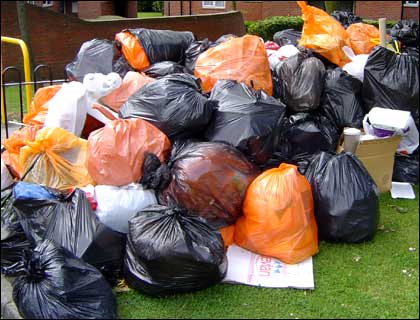
 Rubbish is everything that is not wanted anymore. There are three different types of rubbish, Domestic, Industrial and Commercial & Hazardous. Domestic rubbish is from households, Industrial and commercial rubbish is from factories, offices, shops and schools, and Hazardous rubbish is waste that needs to be disposed of in a careful way to prevent pollution.
Within rubbish there is two types of substances and materials, which are:
- Biodegradable rubbish breaks down naturally in the environment and eventually disappears e.g. left-over food and paper
- Non-biodegradable rubbish does not break down naturally in the environment e.g. drinks cans and plastic bottles
Two thirds of rubbish that are thrown away can be recycled but are still disposed of. Which is why we at London City Waste Clearance always aim to recycle any rubbish that is worth recycling. By recycling where possible, it conserves fossil fuels, both as raw materials and through the energy used to make products, and reduces the amount of waste going into landfill.
It’s not just materials that can be recycled but also food. After rubbish is collected, it goes through various processes to be recycled. Things that people consider to be rubbish but can actually be recycled are:
- Plastic – different types of plastic are sorted and broken down into flakes, cleaned, melted and then made back into a wide variety of new plastic or plastic-containing items
- Glass – this is sorted by colour, crushed, melted and into new bottles and jars. This is more energy and resource efficient than creating brand new items.
- Cans and aerosols – these are sorted using a magnet and compressed, then melted and rolled out into a sheet. Aluminium is sold back to can makers, where it can be used in a new can within six weeks of its disposal, while steel is recycled in a wide range of way, for example in fridges, new cans, as components of machinery and in the construction industry
- Paper – this is pulped at a mill and inks and staples, etc., are washed out. The pulp is then reduced in thickness between wire meshes, dried and rolled into reels.
- Food waste – large-scale processing plants heat and sterilise food waste to remove bacteria, and it is then composted, which takes a few months
- Clothing and shoes – these are sorted, then sent to UK charity shops or overseas to wherever they are needed